Quirky Trees: A Designer’s Real-World Embroidery Review
First Impressions: Spooky Charm, Not Just Gimmicks
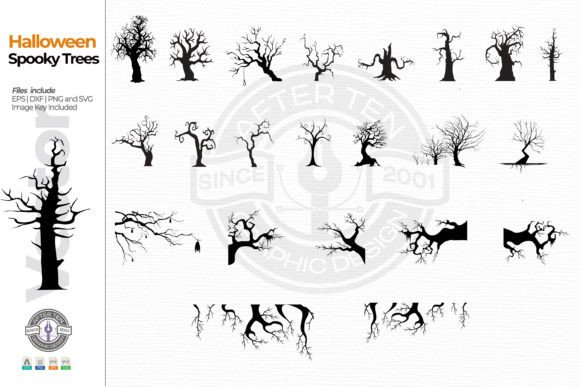
When I opened Quirky Trees, I wasn’t expecting subtlety—and I didn’t get it. That’s a good thing. These aren’t delicate botanical sketches; they’re expressive, slightly lopsided trees with crooked branches, hollow eyes, and that unmistakable Halloween wink. The graphics lean into playful spookiness without tipping into cliché—no cobwebs or plastic bats here. As a designer who’s stitched hundreds of seasonal motifs, I immediately saw how Quirky Trees could elevate a handmade product from “cute” to “conversation-starting.” It feels like something you’d sketch on a napkin at a pumpkin patch—not over-engineered, but full of personality.
Real Project Test: A Baby Sweatshirt for a Local Boutique
Last week, I used Quirky Trees on a custom order: a soft organic cotton baby sweatshirt for a local boutique launching its first Halloween collection. The design went front-and-center, scaled to 3.2 inches tall. Right away, the layout worked—its compact vertical shape avoided seam lines and fit neatly in standard hoops. The branch curves flowed naturally across the chest curve, and the open negative space between limbs kept stitch density manageable. No puckering. No thread breaks. What surprised me was how well the whimsy translated in thread: even in matte cotton embroidery floss, the “ghostly touch” came through—not eerie, but endearing. Parents loved it. One customer even asked if we offered matching onesies (we now do).
Where Quirky Trees Shines in Practice
- Embroidered patches: Its clean silhouette and moderate detail hold up beautifully when cut and fused—ideal for scout badges, denim jackets, or tote bag accents.
- Tote bag design: Stitches cleanly on canvas and medium-weight linen blends. The design’s balanced weight prevents sagging or distortion after repeated washing.
- Baby embroidery: The rounded shapes and absence of fine linework make it forgiving on knit fabrics and safe for sensitive skin—no scratchy satin stitch clusters.
- Holiday embroidery for small shop products: Works equally well on tea towels, pillow covers, and aprons. I’ve layered it subtly in one corner of a flour-sack kitchen towel—minimalist but unmistakably festive.
- Digital embroidery file use: Clean vector-based outlines mean crisp printable mockups. I dropped Quirky Trees into lifestyle templates for Etsy listings—it reads clearly even at thumbnail size.
Where to Pause—and Stitch With Intention
Quirky Trees isn’t magic. Like any machine embroidery design, it needs thoughtful pairing. On stretchy fabric (think ribbed baby caps or lightweight jersey tees), skip the smallest versions unless you’re using cutaway stabilizer and reducing stitch speed. Thin fabrics—especially light-colored voile or rayon challis—need backing plus a light topping to prevent thread show-through in those open branch areas. And while it reads well on dark fabric, avoid dense black-on-black combos; the charm lives in contrast. I tested it on charcoal fleece and swapped to off-white thread—suddenly, every twig popped with quiet clarity.
Design Assets That Build Trust
As an Etsy seller and craft business owner, I judge embroidery files not just by how they stitch—but by how they make my customers feel. Quirky Trees delivers handmade authenticity without looking amateurish. It doesn’t scream “clip art.” That matters. When someone buys a personalized gift—a custom embroidered pillow cover with Quirky Trees stitched beside a child’s name—they’re buying warmth, intention, and seasonal joy. Not just decoration. That emotional resonance lifts perceived value, encourages repeat orders, and strengthens brand consistency across holiday collections.
Practical Notes Every Embroidery Designer Should Check
Before committing Quirky Trees to your next finished product—or listing it as part of your digital product shop—run these checks:
- Test the design on scrap fabric matching your project’s weight and weave. Pay attention to how fill stitches settle in curved areas.
- Review thread colors against your base fabric in natural light—not just screen previews.
- Inspect small details: Are branch tips sharp enough? Do any tiny loops risk snagging? (In Quirky Trees, they don’t—but verify.)
- Confirm hoop size compatibility. This design scales well, but avoid shrinking below 2 inches unless your machine handles fine running stitch reliably.
- Use proper stabilizer: Medium-weight cutaway for knits, tear-away for stable wovens, and a light film topping for shiny or slippery fabrics.
- Check licensing terms before selling physical items or bundling the file. Since this is listed under Graphics in the Crafts category, assume commercial use is permitted—but always confirm directly with the source.
- Try a black-and-white mockup. Does the shape still read clearly? With Quirky Trees, yes—the silhouette carries the idea, no color needed.
Final Thought: A Design That Fits Its Role
Quirky Trees doesn’t try to be everything. It’s not a complex applique design with dozens of color changes. It’s not meant for large-scale wall hangings or intricate monograms. It’s a focused, joyful, commercially smart embroidery file—perfect for small-batch makers who want seasonal appeal without seasonal stress. Whether you’re stitching a single personalized gift or scaling up for craft fair inventory, it performs consistently, photographs well, and lands with sincerity. In a market flooded with generic Halloween graphics, Quirky Trees stands out by being quietly confident in its own weirdness—and that’s exactly what makes it work.