I'll Take Em Deviled: An Embroidery Designer's Review
When a design file lands on my desk with a name like I'll Take Em Deviled, I already know it's going to be the kind of piece that makes someone smile before they even touch the fabric. That kind of instant recognition is gold in the handmade world, where a clever phrase can turn a simple tea towel into a bestseller at a craft fair or a conversation starter in a boutique shop. But as any experienced stitcher knows, a great concept on screen doesn't always translate into a great finished product. So I spent some quality time with this design, thinking through every angle of how it would actually perform on real projects, in real thread, on real fabric.
First Look at the Design Personality
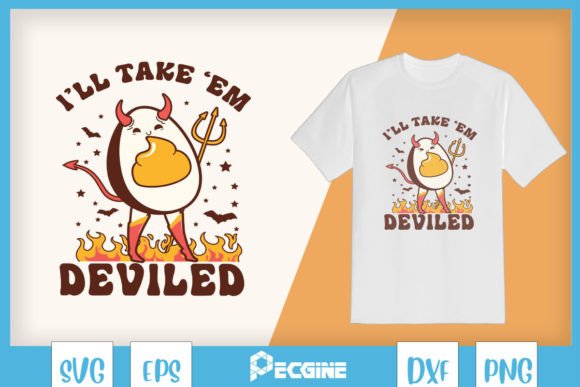
Opening the file set, I found exactly what I'd expect from a well-prepared Graphics bundle: one SVG, one PNG, one DXF, and one EPS, all with clean transparent backgrounds. That's a solid foundation for anyone working in the Crafts space, whether you're digitizing for embroidery, printing mockups, or creating vinyl cuts. The PNG comes pre-sized and formatted in high resolution, which is a thoughtful touch for crafters who need to drop a design into a printable mockup without fussing around in editing software.
The phrase itself has a playful, slightly cheeky personality that sits comfortably in the modern farmhouse-meets-Southern-charm aesthetic. I could immediately picture it on a flour sack kitchen towel, hanging next to a stovetop where someone is whipping up a batch of deviled eggs for a family gathering. The lettering style has a casual, hand-drawn warmth that feels approachable rather than stiff. It's the kind of text-based design that works because it doesn't try too hard. It just says what it says, and the right customer will instantly connect with it.
Where This Design Belongs in the Real World
I've tested hundreds of text-based embroidery designs over the years, and placement is everything. With I'll Take Em Deviled, the natural home is in the kitchen and dining space. I'd reach for this design first when planning a set of embroidered tea towels for a hostess gift, a decorative apron for a holiday cooking session, or a set of napkins that would make a wedding shower gift feel personal and memorable.
But limiting this design to kitchen linens would be a mistake. The personality of the phrase opens up some interesting possibilities for custom apparel too. A lightweight sweatshirt with this design stitched across the chest, worn to a potluck or a barbecue, would absolutely get comments. I've seen similar text-based designs perform surprisingly well on tote bags at farmers markets, where shoppers are already in a food-focused mindset. A canvas tote with I'll Take Em Deviled embroidered near the top edge, paired with a simple illustration of an egg, could be a strong seller for an Etsy shop during the spring and summer months.
Scaling and Hoop Size Considerations
One of the first things I check with any text-based design is how it will behave at different sizes. The wording here is concise enough that it should hold up well at a range of dimensions, but I'd caution against going too small. On a baby onesie or a narrow hat panel, the details in the lettering could start to close up, especially if the stitch density is on the heavier side. I'd recommend testing a scrap piece first, ideally at the exact hoop size you plan to use for production, before committing to a full run of items.
For smaller embroidery areas like a cap front or a patch, you'll want to confirm that the lettering maintains legibility. A running stitch approach might serve you better than a dense satin stitch on those tighter curves, particularly if you're working with a textured fabric that fights back against fine detail. On the other hand, if you're going big on the back of a denim jacket or across a pillow cover, you'll have plenty of room to let the design breathe and show off the letterforms properly.
Real Project Scenario: The Holiday Kitchen Set
Let me walk through a scenario that I think captures the best use of this design. Imagine a small shop owner preparing for a holiday market in November. She wants to offer something that feels seasonal without being limited to Christmas, something that works for Thanksgiving gatherings, Friendsgiving parties, and general fall entertaining. She picks up I'll Take Em Deviled and pairs it with a warm cream linen tea towel and a matching apron in a soft olive green.
She tests the design on her mid-range single-needle machine, using a cutaway stabilizer on the linen to prevent puckering. She chooses a thread color that's a few shades darker than the fabric, creating a tone-on-tone effect that feels elegant and understated. The result is a set that looks like it belongs in a high-end kitchen boutique, not a mass-produced big-box store. At the market, customers pick up the towel, read the phrase, and laugh. That emotional connection is what turns a browser into a buyer. The set sells out by noon on the first day.
That's the power of a design that knows exactly what it is and doesn't overcomplicate the message. I'll Take Em Deviled doesn't need to shout. It just needs to land with the right person at the right moment.
Fabric and Thread Choices That Make a Difference
If you're planning to use this design on a tote bag or a sweatshirt, fabric texture becomes a major factor. A dense weave like canvas or duck cloth will hold crisp lettering beautifully, while a looped terry cloth or a fuzzy fleece might blur the edges of the text. I've learned the hard way that a design that looks perfect on smooth quilting cotton can turn into a muddy mess on a plush bath towel. For I'll Take Em Deviled, I'd stick to stable, medium-weight wovens whenever possible, and always use a topper on anything with a nap.
Thread color deserves a thoughtful approach too. On a light background, a deep charcoal or a warm burgundy can give the design a sophisticated, modern feel. On a dark fabric, a bright white or a soft cream will pop beautifully, but watch out for show-through on thinner materials. I've also seen this style of design work wonderfully in metallic thread for a festive touch, though I'd only recommend that for experienced stitchers who know how to manage metallic tension issues.
Working With Stretch and Thin Fabrics
I'd be cautious about using I'll Take Em Deviled on highly stretchy fabrics like performance tees or thin knit baby clothes without proper preparation. Text-based designs can distort easily when the fabric stretches during hooping or wear. A heavyweight cutaway stabilizer and a basting stitch around the perimeter can help, but if you're new to embroidering on knits, start with something more forgiving like a woven cotton tee or a structured sweatshirt before tackling stretch projects.
Small Business and Commercial Use Thoughts
For Etsy sellers and small shop owners, this design hits a sweet spot. It's specific enough to attract a niche audience, but broad enough to work across multiple product categories. A single design file can generate revenue through finished tea towels, digital mockups, printable wall art, and even iron-on transfers if your license allows it. Before listing anything, though, confirm the commercial terms with the original designer. The presence of multiple file formats like SVG, DXF, and EPS in this digital embroidery file bundle suggests the creator understands that crafters use different software and workflows, which is a good sign of a professional asset.
I also appreciate that the transparent background on the PNG means less cleanup work for anyone creating printable mockup images or product previews. When you're running a small handmade business, every minute saved on file prep is a minute you can spend on actual stitching or customer service.
Testing and Quality Assurance Before Production
No matter how much I like a design on screen, I never skip the test stitch. With I'll Take Em Deviled, I'd run a sample on the same fabric and stabilizer combination I plan to use for the final product. I'd check the stitch density, looking for any areas where the thread might pile up too thick or where gaps appear between letters. I'd also test the design in a black and white preview to see how it reads without color, which is a useful trick for judging contrast and legibility before committing thread to fabric.
If you're planning to offer this on dark fabric, do a dedicated test on that exact material. The same design can look completely different on navy canvas versus natural linen, and you want to catch any surprises before a customer spots them. I'd also recommend washing the test piece once or twice to see how the stitches settle and whether any thread tension issues reveal themselves after laundering.
Branding and Customer Perception
When a customer sees I'll Take Em Deviled on a handmade product, they're not just buying a towel or a bag. They're buying a mood, a personality, a little piece of humor that fits their kitchen or their sense of style. As makers, we have to think about what our products communicate. This design says, "I don't take myself too seriously, but I care about quality." That's a powerful combination for building brand consistency and customer trust.
For a craft business that focuses on kitchen textiles, this design could become a signature piece. Pair it with coordinating designs in the same font style, and you've got a cohesive collection that feels intentional and professional. Customers who buy one piece are more likely to return for another when they see a unified aesthetic across your product line.
Final Practical Notes for Stitchers
Before you load this design onto your machine, take a few minutes to review your hoop size and confirm the design fits comfortably within your available stitching area. Check the stitch count if your software displays it, and decide whether you need to adjust density for your specific fabric. Choose a stabilizer that matches the weight of your material. Test on scrap fabric first. Inspect the small details in the lettering, especially the curves and connections, to make sure they'll render cleanly at your chosen size.
If you're digitizing from the provided vector files, pay attention to how the letterforms translate into stitches. A satin stitch might be perfect for the main text, but a fill stitch could work better for any decorative accents or backgrounds. The SVG and EPS files give you flexibility to adjust the artwork before digitizing, which is a real advantage for experienced embroiderers who want to fine-tune the design for specific projects.
For anyone selling finished products with this design, confirm the licensing terms clearly. The files are provided as design assets for craft use, but commercial embroidery on items for sale may require an extended license depending on the original creator's policies. This is standard practice, and checking ahead of time protects your business and respects the designer's work.
Should you add I'll Take Em Deviled to your design library? If your product line includes kitchen textiles, entertaining-themed gifts, or personality-driven apparel, this is a strong candidate. It's focused, funny, and formatted in a way that gives you creative control over the final output. The transparent backgrounds and multiple file types mean you're not locked into one workflow, which is exactly what a versatile design asset should offer.