Yin and Yang: A Designer’s Real-World Embroidery Review
As someone who’s stitched hundreds of designs onto totes, baby onesies, aprons, and boutique sweatshirts—and advised dozens of Etsy sellers on what *actually* holds up in production—I opened the Yin and Yang embroidery file with quiet curiosity. Not hype. Not assumptions. Just a question: Will this feel intentional, balanced, and wearable—not just symbolic—when it’s stitched out?
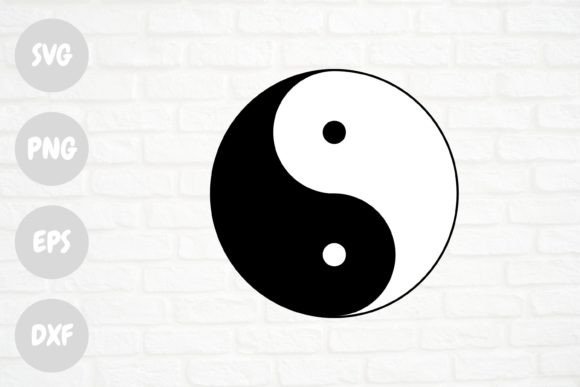
First impression? Clean. Centered. Quietly confident. The design isn’t fussy—it leans into the classic circular duality without overcrowding the negative space. There’s no extra ornamentation, no decorative borders or script labels. That simplicity is its strength—and its warning. This isn’t a “busy” design meant to dazzle at arm’s length. It’s a thoughtful anchor: subtle enough for a linen tea towel, grounded enough for a black denim jacket patch, refined enough for a wedding gift pillow cover.
I tested Yin and Yang on a medium-weight cotton tote bag—my go-to for small-batch shop merchandise. With a standard 4x4 hoop and medium tear-away stabilizer, the stitch-out was smooth. No thread breaks. No puckering. The curve of the circle held true, and the dividing line between light and dark flowed cleanly—no jagged transitions or pixelated edges (a common red flag in low-res Illustrations repurposed as embroidery assets). The fill stitches were even, not overly dense—critical for breathable fabrics like organic cotton or lightweight canvas. That means less stiffness, better drape, and fewer customer complaints about “scratchy embroidery.”
Where Yin and Yang shines most is in projects where meaning matters more than flash. Think: a soft bamboo onesie for a newborn (the gentle contrast reads as calm, not clinical), a minimalist apron for a ceramicist’s studio (it complements handmade tools, not competes with them), or a navy sweatshirt for a yoga studio’s staff (professional but warm). It also translates beautifully to embroidered patches—clean edges, no tiny interior details that vanish at 2 inches wide. As a Graphics-based design, its vector-friendly clarity helps, but remember: if you’re using the PNG files for sublimation, confirm resolution is 300 DPI before scaling beyond 5x5 inches.
That said—this isn’t a one-size-fits-all embroidery file. Use caution on stretchy knits (like jersey tees) without proper cut-away stabilizer and reduced top tension. On dark fabric, test your thread colors: a creamy off-white for the “yang” side may read warmer and softer than stark white, which can look harsh or overly bright. And avoid placing Yin and Yang directly over seams, curved cap fronts, or tight corners of pillow covers—its symmetry depends on stable, flat real estate. If stitching on a tumbler sleeve or curved mug wrap, consider simplifying the outer circle to a single running stitch outline instead of full fill—preserves legibility without distortion.
For craft business owners and Etsy sellers, Yin and Yang works because it invites personalization without demanding it. You don’t need to add names or dates to make it feel special—its balance *is* the message. That builds trust: customers recognize intentionality. A buyer ordering a custom embroidered tote isn’t just buying canvas—they’re choosing harmony, mindfulness, or quiet confidence. That emotional resonance lifts perceived value, especially alongside hand-folded packaging or a handwritten note. It also pairs seamlessly with other neutral-tone designs in your shop—think simple lotus motifs, clean mountain silhouettes, or unadorned moon phases—keeping brand consistency strong across listings and printable mockups.
Here’s what I always do before committing Yin and Yang to a client project or shop batch:
- Test on scrap fabric first—same weight and weave as your final product, especially if using textured linen or fleece-backed sweatshirts.
- Check thread color contrast on both light and dark backgrounds; sometimes a gray-toned thread reads richer than black or white.
- Review stitch density in your embroidery software—if it’s under 8,000 stitches, it’s likely optimized for home machines; over 12,000 suggests commercial-grade density (and possible stabilizer upgrades).
- Confirm hoop size compatibility: if your machine maxes out at 4x4, verify the design fits comfortably within that—no last-minute trimming of the outer curve.
- Inspect small details at actual stitch-out scale: the dot-in-each half should be fully formed, not collapsed into a blob or lost in fill.
- Mock it up in black and white—if the contrast holds without color, your finished product will read clearly on any fabric.
- Use proper stabilizer: medium tear-away for stable wovens, cut-away for knits, and lightweight fusible for delicate items like baby blankets.
- Verify licensing before selling finished items or bundling Yin and Yang into digital embroidery kits—some Graphics licenses restrict commercial redistribution.
This isn’t just another machine embroidery design you download and forget. Yin and Yang asks you to slow down—to consider placement, fabric choice, thread nuance, and how quiet symbolism lands in a noisy marketplace. It rewards attention. When stitched well on a sturdy tote or a buttery-soft baby blanket, it doesn’t shout. It settles. And in handmade product circles—where authenticity and care are currency—that kind of presence sells itself.
If you’re building a craft business around intention, not inventory—if your customers choose you for thoughtfulness over trends—Yin and Yang earns its place in your embroidery project queue. Not as filler. But as foundation.