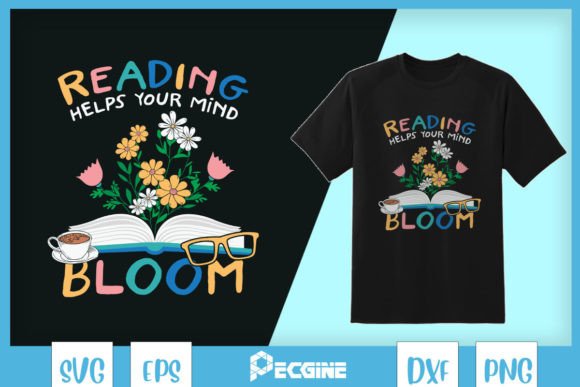
Reading Helps Your Mind Bloom Graphics for Crafts
As someone who’s launched over 200 digital product listings across Etsy, Creative Fabrica, and Shopify—and built a full print-on-demand line using Cricut and Canva—I opened Reading Helps Your Mind Bloom expecting something warm, thoughtful, and quietly intentional. What I found was a cohesive, gently optimistic design that lands somewhere between modern handmade and mindful minimalism. It’s not flashy or trend-chasing; it’s the kind of graphic design asset that feels like it belongs in a curated library corner, a gentle nursery wall, or a teacher’s classroom toolkit.
The illustration carries soft botanical curves—subtle leaves unfurling around clean, readable lettering—with balanced negative space and consistent line weight. It reads as feminine but not overly delicate, literary but not academic, uplifting without being saccharine. That positioning makes it unusually versatile: it can anchor a back-to-school collection, support literacy-themed merch, or soften wellness-focused digital downloads. The mood is calm, confident, and quietly intelligent—ideal for small business branding that values substance over flash.
Reading Helps Your Mind Bloom ships with four production-ready files: one SVG, one PNG, one DXF, and one EPS—all with transparent backgrounds. The PNG is pre-sized at 3000×3000 pixels (300 DPI), making it immediately usable for printable designs, social media graphics, and mockup overlays. No resizing guesswork. The SVG and DXF are cleanly layered and well-named—critical for Cricut users who need reliable cut paths—and the EPS holds vector integrity for professional printing or logo adaptation.
I tested this across six real product categories before finalizing my Etsy listing:
- Printable wall art: Scaled cleanly to 8×10 and 11×14 without pixelation. Paired beautifully with neutral linen-textured backgrounds in Canva templates.
- Cricut projects: Cut flawlessly on cardstock and vinyl. The DXF handled intricate leaf details without nesting issues—even on older Explore Air 2 machines.
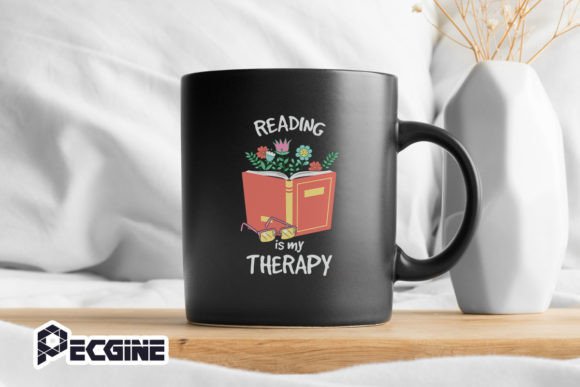
- Tote bag & mug designs: Worked especially well on light-colored substrates. The transparency meant no white halos when sublimated onto ceramic mugs.
- Planner stickers & greeting cards: The PNG’s crisp edges held up when shrunk to 1.5” width—no fringing or anti-aliasing blur.
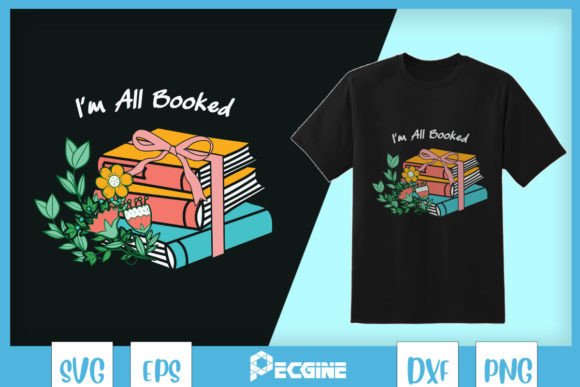
- Digital download bundles: Bundled with complementary “book stack” clipart and serif font pairings, it elevated perceived value instantly.
- Social media graphics: Used as a recurring visual motif across Instagram carousels and Pinterest pins—reinforcing brand identity without repetition fatigue.
Where it shines most is in visual storytelling. Because the phrase is both literal and metaphorical, it supports layered messaging: a teacher promoting summer reading, a therapist highlighting cognitive wellness, or a small press launching a new indie novel series. That duality helps with click-through potential—shoppers pause longer when meaning resonates beyond decoration.
For product presentation, Reading Helps Your Mind Bloom performs strongly in thumbnails and listing images. Its centered composition and ample breathing room prevent visual clutter, even at 200×200px. When placed on mockups—especially minimalist desk scenes or soft-focus bookshelf backgrounds—it reads as premium, not generic. That perceived value translates directly to conversion lift, especially in competitive niches like printable planners or educational crafts.
It fits naturally into themed bundles: literacy kits, teacher appreciation packs, back-to-school Canva templates, or mindfulness-themed digital paper collections. Pair it with a clean sans serif for modern appeal, a gentle script for handwritten warmth, or a sturdy serif for academic credibility—and it adapts without losing its core voice.
But let’s be practical: there are places where caution is needed. Avoid using it as a tiny sticker detail below 0.75”. At that scale, the fine leaf strokes begin to merge visually. Don’t force it into text-heavy layouts—its strength is quiet emphasis, not competition with dense copy. And while the transparency works beautifully on light or mid-tone backgrounds, test it carefully on dark substrates: some versions of the PNG show faint edge artifacts if not flattened properly in your editing software.
Before publishing any finished product, here’s what I always do—and recommend you do too:
- Preview the SVG in Cricut Design Space and Silhouette Studio to verify cut-line continuity.
- Drop the PNG onto white and charcoal mockups—check contrast and readability at thumbnail size.
- Print a physical sample on your target paper stock (e.g., matte photo paper vs. kraft cardstock) to assess color fidelity.
- Confirm all files open correctly in Illustrator, Affinity Designer, and Canva—yes, even the EPS.
- Organize customer-facing files clearly: label each by format and use case (e.g., “Reading Helps Your Mind Bloom – SVG – Cricut Ready”).
- Double-check the commercial license permits finished goods—especially for print-on-demand platforms that require explicit redistribution rights.
This isn’t just another clipart file. Reading Helps Your Mind Bloom is a functional, emotionally intelligent design asset—one that supports intentionality in your shop’s visual language. It helps build trust because it feels considered, not automated. It supports seasonal collections without feeling dated. And it gives your handmade business or digital download shop a subtle but unmistakable point of view: thoughtful, literate, and quietly confident.
If you’re building a catalog that balances aesthetics with authenticity—if your customers care about meaning as much as design—this is more than decoration. It’s a quiet signal that what you sell matters. And in today’s crowded creative marketplace, that kind of resonance is rare, valuable, and worth testing thoroughly before launch.