Howdy Christmas Gingerbread
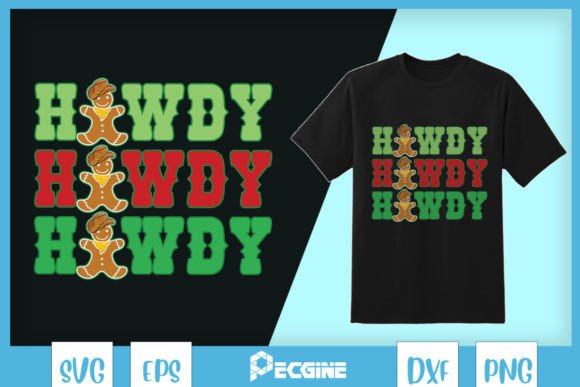
As someone who’s stitched hundreds of holiday designs—from delicate snowflakes on baby onesies to bold reindeer on boutique sweatshirts—I opened Howdy Christmas Gingerbread expecting charm, not cliché. What I found was a warm, confident little character that feels handmade *before* it’s even stitched: a gingerbread man tipping his hat with a wink and a “howdy,” dressed in classic red-and-green stripes, a tiny bow tie, and boots that look like they’ve walked straight out of a cozy Texas cabin at Christmastime.
I immediately pictured it on a natural linen tote bag for a local craft fair—something sturdy enough to hold hot cocoa mugs and festive cookies, but soft enough to feel personal. The design’s clean silhouette and balanced negative space mean it won’t drown in fabric texture or vanish under dense stitching. It’s not overly detailed, which is smart: no tiny buttons to misfire in satin stitch, no fragile limbs that’ll fray after three washes. Just friendly, legible, and full of quiet personality.
For embroidery designers and small business owners, Howdy Christmas Gingerbread lands right in the sweet spot between novelty and wearability. It reads clearly at 3.5”–4.5” hoop sizes—the range I use most for custom apparel, baby embroidery, and embroidered patches. On a lightweight cotton sweatshirt? It holds up beautifully with medium-density fill stitch and a light tear-away stabilizer. On a thick terry cloth tea towel? I’d add a cutaway backing and reduce stitch density slightly in the boot areas to avoid puckering—but the design’s open layout makes those tweaks intuitive, not stressful.
Where it shines brightest is in handmade product storytelling. This isn’t just a clipart-style graphic—it’s a character with voice. When stitched onto a denim apron for a bakery’s holiday staff gifts, it adds warmth without kitsch. On a fleece blanket for a newborn? It reads as gentle, not garish—especially when stitched in muted sage and cream thread instead of high-contrast reds. That flexibility matters: your Etsy seller clients will appreciate how easily it adapts to their brand palette, and your craft fair shoppers will pause longer because it feels intentional, not mass-produced.
That said, Howdy Christmas Gingerbread isn’t magic—and it shouldn’t be treated like it is. It performs best on stable, medium-weight fabrics: canvas, midweight cotton, twill, felt, and smooth knit blends (with proper stabilizer). Avoid using it full-size on highly textured burlap or loosely woven gauze—the outline can blur. On stretchy fabric like jersey, always test with a ballpoint needle and light-hooped stabilizer; the curved arms and hat brim need clean tension to stay crisp. And while the PNG file is pre-sized and transparent, remember: that’s for digital previews only. For actual machine embroidery, you’ll need to digitize or convert the SVG/EPS/DXF files properly—don’t assume the PNG translates directly to stitch commands.
I also wouldn’t push it into ultra-small applications without adjustment. At under 2.5”, the bow tie and facial details start to compress, risking lost definition in satin stitch. If you’re making mini embroidered patches for ornament tags or baby bibs, simplify first—remove the inner stripe detail or widen the hat brim by 0.5mm. Likewise, on dark fabric, test thread colors carefully: a bright kelly green might pop too sharply against navy fleece, while a forest green gives richer harmony. Always run a black-and-white mockup before finalizing your color plan—it reveals contrast issues your eyes gloss over in RGB.
One underrated strength of Howdy Christmas Gingerbread is its versatility across product types. As a digital embroidery file, it works equally well for single-needle monogramming (think: initials + gingerbread beside them on a kitchen towel) or multi-color applique designs (add a felt boot layer beneath the stitched outline). Its consistent line weight and generous spacing make it forgiving for beginners learning satin stitch control—and polished enough for seasoned pros building a cohesive holiday collection. I’ve already paired it with simple holly sprigs and “Y’all Merry” lettering for a small shop’s limited-run sweatshirt line—and customers commented specifically on how “friendly” and “unforced” the design felt.
For craft business owners and Etsy sellers, this design supports trust-building in subtle but real ways. A well-executed machine embroidery design tells buyers you pay attention—not just to stitching, but to mood, scale, and context. Howdy Christmas Gingerbread helps you deliver that quietly. It doesn’t shout; it invites. That matters when someone’s choosing a personalized gift for their sister’s first Christmas as a mom—or selecting a boutique-branded tote to carry to a holiday market. It says “thoughtful,” not “trend-chasing.”
Before you load it into your machine or list it in your shop, here’s my shortlist of must-do checks:
- Test on scrap fabric—especially if using textured or dark material.
- Review stitch density in the boot area and hat curve; adjust if needed for your fabric type.
- Confirm hoop size compatibility—the SVG and EPS files give you room to resize, but don’t stretch beyond 120% without re-digitizing key curves.
- Inspect small details at actual stitch scale: zoom in on the bow tie knot and eye shape in your embroidery software.
- Use proper stabilizer: light cutaway for knits, tear-away for wovens, fusible for lightweight linens.
- Check licensing terms before selling finished products or bundling the files—you’re responsible for commercial use compliance, even with Crafts and Graphics category assets.
In the end, Howdy Christmas Gingerbread isn’t about perfection—it’s about presence. It fits naturally into real projects because it was clearly designed with real hands, real machines, and real customers in mind. Whether you’re stitching holiday gifts for neighbors or building a seasonal collection for your small shop, this one earns its place in your design assets library—not as filler, but as a reliable, joyful anchor.